

At Anchored Hope Therapy, we use somatic and body-based approaches alongside other trauma-informed therapies to help you explore the relationship between your thoughts, emotions, body, relationships, and nervous system. Rather than focusing only on what is happening in your mind, somatic therapy invites us to notice what is happening within your body and to become curious about what your body may be communicating.
What is Somatic Therapy?
Somatic therapy is a body-based approach to psychotherapy that recognizes that our experiences affect more than our thoughts and emotions. Stress, trauma, relationships, and significant life experiences can also shape the ways we experience ourselves physically.
In somatic therapy, your therapist may invite you to notice sensations, movement, breath, tension, impulses, emotions, or changes in your body as they arise during therapy. You might slow down and notice what happens when you talk about something difficult. You might become curious about where you feel an emotion in your body or what happens when you feel more grounded and supported.
The goal isn't to force your body to change or to make you perform relaxation exercises.
It is about developing a deeper awareness of yourself and creating more possibilities for how you respond to what life brings.
Somatic therapy and trauma
Trauma can affect the way we experience safety, relationships, emotions, and our own bodies.
Sometimes the nervous system continues responding to experiences from the past even when the immediate danger is gone. You might find yourself constantly preparing for something to go wrong, becoming overwhelmed more easily than you would like, disconnecting when things feel too much, or having difficulty settling even when you know you are safe.
This can be particularly true for people living with complex trauma or longstanding patterns that began early in life.
Somatic therapy doesn't require you to simply re-tell your story and hope your body catches up. Instead, therapy can include attention to what is happening in the present moment as you talk about your experiences.
Your therapist may help you notice the places where you feel activated, disconnected, guarded, or more at ease. Together, you can begin to understand these responses with curiosity rather than judgment.
For some people, this creates a different way of working with trauma than cognitive processing alone.
Your body is part of the conversation
At Anchored Hope, we believe therapy can include both top-down and bottom-up approaches.
Top-down approaches work with thoughts, beliefs, memories, meaning, and the stories we carry about ourselves and our experiences. Bottom-up approaches invite awareness of the body and nervous system as part of the therapeutic process.
We don't see these approaches as competing with each other.
Sometimes you need to understand something.
Sometimes you need to feel something.
Sometimes you need to notice what your body is doing before you can understand what you need.
Somatic therapy gives us room for all of those experiences.
Who might benefit from somatic therapy?
Somatic therapy may be helpful if you find yourself saying, “I know this logically, but I still can't seem to feel it.”
You may be looking for support with trauma or PTSD, anxiety, chronic stress, grief, relationship patterns, life transitions, or experiences of feeling disconnected from yourself. You may notice that your body reacts strongly in certain situations even when you aren't consciously aware of why.
You don't have to arrive knowing what your body is trying to say. That is part of what we can explore together.
Somatic therapy may also be a good fit if traditional talk therapy has been helpful but you are looking for a way to include more awareness of your physical and emotional experience in the work.
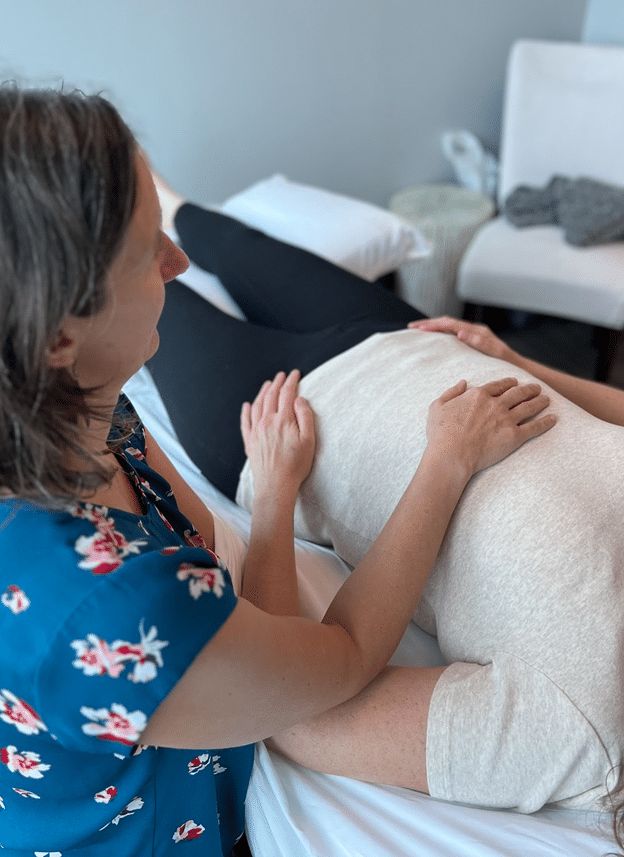
Chelsea and Catherine offer Somatic Integration sessions using a collaborative/community care approach. This session is typically one hour and includes both Craniosacral Therapy and Somatic Parts Therapy. Chelsea also blends somatic therapy, trauma therapy, Brainspotting, touch work, and Internal Family Systems when offering somatic integration sessions. To read more about Chelsea's approach visit her bio. To read more about Catherine's approach visit her website.