

What Makes Bodywork Trauma-Informed?
By Chelsea Haverly | July 28, 2026
“Our bodies hold our stories, our experiences, and our trauma. Our bodies are also the key to our healing, hope, and strength”-
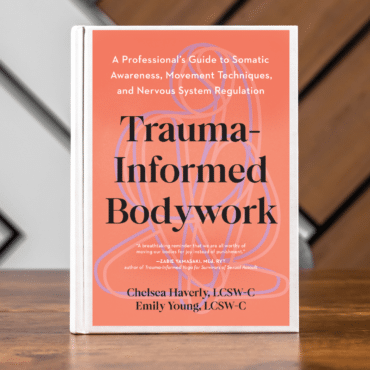
Trauma-Informed Bodywork: A Professional’s Guide to Somatic Awareness, Movement Techniques, and Nervous System Regulation
Trauma-informed bodywork isn’t about treating trauma itself. It’s about creating an experience where your nervous system doesn’t have to stay in “protection mode.” This can feel unsafe at first, it can feel unnerving to loosen protective posturing after years or even decades. Some say, if it’s not hurting, it’s not working. Honestly, this can keep people feeling terrible and in pain in their body. When our bodies are allowed to feel without intense pain- rather with neutrality or through light touch, defenses can go down because we do not rise to meet the pressure or pain from a guarded place.
Instead of believing that deeper pressure is always better or that discomfort is something you should tolerate, trauma-informed care asks a different question:
“What does your body need today?”
That answer might be resourcing the body vs. fixing the body.
It might be a gentle, calming touch.
It might be slowing down.
Or it might simply be having someone attune to what is happening without judgement.
In a trauma-informed session, you remain an active participant in your care. Your practitioner checks in with you, explains what they’re doing, asks for your consent, and welcomes your feedback throughout the session. You can change your mind, ask questions, you can share what comes up for you and seek clarity on what could be helpful or tune into your own nervous system and ask “what do I need today?”.
Because your comfort matters. Your voice matters. Your intuition may be whispering what you already know- that something isn’t quite right or I need something different here.
Our bodies hold the stories of our lives, an embodied map of experiences catalogued in the fascia, organs, blood, bone, and connective tissue like an intricate web of unique existence that only you truly know. Trauma-Informed Bodywork supports the body in healing through its own inherent rhythm. The practitioner is called to support the healing process, not to fix what has happened. It’s a reverent witnessing of the body’s inherent wisdom to heal and restore its own balance when offered a remembering of such a pattern. Trauma-informed bodywork recognizes that healing happens best when we feel safe, respected, and in control of our own bodies and we are reminded of our bodies ability to find resources and regulation even when we are experiencing the chaotic current of life. Finding resource and regulation with another person, like a practitioner or in community with others is a deeply healing experience.
Trauma-Informed Care Is for Everyone…
Although the name includes the word “trauma,” this approach isn’t only for people who identify as trauma survivors.
It’s for anyone who wants healthcare that feels collaborative instead of prescriptive.
It’s for people living with chronic pain.
For those recovering from injuries or surgery.
For caregivers carrying the weight of everyone else’s needs.
For people navigating anxiety, burnout, or major life transitions.
Honestly…it’s for anyone who wants to feel heard, valued, and respected in a world that can make us feel crazy or untreatable.
Your Body Remembers
We often think of trauma as something that only happens after major life events, but trauma can look different for everyone. It might come from an accident, surgery, chronic pain, emotional stress, caregiving, systemic injustice, intergenerational patterns, or experiences where we didn’t feel seen, heard, or safe and should have.
Our nervous systems are designed to protect us. Sometimes, after difficult experiences, they stay on high alert long after the danger has passed. This can manifest in the body as tight shoulders that never seem to relax, headaches, jaw tension, digestive issues, difficulty sleeping, chronic pain, or simply feeling disconnected from your body or unsafe to feel bodily sensations.
Your body isn’t working against you. It’s doing exactly what it learned to do to keep you safe, what it knows will keep you from feeling overwhelmed and these patterns can shift with attention and intention. Oftentime, this shift happens more easily with the support of another person who is regulated and able to hold space- like a practitioner in sessions, a trusted friend, or a community elder.
Healing Begins with Feeling Safe…
One of the biggest differences in trauma-informed bodywork is the understanding that the nervous system plays a huge role in healing. This is not negating other models of cognitive therapy or manual therapies. However, sometimes others modalities re-inforce bodily bypassing by either talking ourselves around discomfort or pushing past our “no’s” for the sake of getting better.
When we feel safe our breathing deepens. Our muscles soften. Our heart rate slows. Blood flow improves, and our bodies are better able to rest, recover, and heal.
When we feel threatened or rushed our bodies often brace. Muscles tighten, breathing becomes shallow, and it can be difficult to fully relax, no matter how skilled the bodyworker may be.
Creating a sense of safety is the treatment. Receiving care from another person, who can attune to you and regulate their own responses is the treatment. Feeling permission to say “no” or “not today” or “I need something different.” is healing.
You Don’t Have to Tell Your Story…
One thing people often wonder is whether they need to share their trauma history or need to explain “why” something is happening.
The answer is no.
Trauma-informed bodywork doesn’t require you to explain your past or relive difficult experiences. You’re welcome to share whatever feels helpful, but you’re never expected to tell your story. In fact, sometimes we can get “stuck in our story” in a way that keeps our body from feeling and somatically processing. Cognitive therapy is incredibly helpful and should not be undervalued, however trauma is not just a cognitive story, but a living story in our bodies. We can sometimes be “stuck” processing it in our minds. Our body does not process with just words, it has its own language, sensations, holding patterns. At times, staying with the story can keep us circling the deeper healing that may be possible.
Your practitioner doesn’t need to know every chapter of your life to offer compassionate, respectful care.
A Different Kind of Healing…
One of the most beautiful things about trauma-informed bodywork is that it shifts the focus from “fixing” the body to partnering with it.
Instead of asking, “What’s wrong with you?”
We begin asking, “What is your body trying to communicate?”
That small shift changes everything.
Healing isn’t about forcing muscles to release or pushing through pain. Often, healing begins when the body finally realizes it doesn’t have to stay on guard anymore.
Sometimes the most powerful thing we can offer isn’t stronger pressure or more advanced techniques.
Sometimes it’s creating a space where someone can simply exhale deeply, be witnessed by another, and to notice the embodied shifts that may be subtle at first- yet deeply nourishing.
Returning home to your body…
Whether you’re coming in because you are in hypermobile body that hurts all the time, you have experienced a long history of trauma, your neck hurts, your shoulders feel like they’re carrying the weight of the world, or you’re simply craving a moment to reconnect with yourself, my goal is the same.
I want you to feel safe.
I want you to feel heard.
I want you to know that your body deserves kindness, not criticism.
It’s your home.
Trauma-informed bodywork honors your pace, your boundaries, and your unique experience. Together, we create a space where healing doesn’t have to be rushed or forced. It can unfold naturally, usually at a slower pace. It can feel nourishing. It can feel like a homecoming.
Additional Resources
To learn more about Trauma-Informed Personal Training visit https://theembodiedtrainer.com/about-emily-young/
To learn more https://podcasts.apple.com/us/podcast/529-trauma-informed-bodywork-with-chelsea-haverly/id1031099411?i=1000769830464
Find a trauma-informed personal trainer across the country at https://www.hopeignitedtraining.com
Buy: “Trauma-Informed Bodywork: A Professional’s Guide to Somatic Awareness, Movement Techniques, and Nervous System Regulation” by Chelsea Haverly and Emily Young https://traumainformedbodywork.com/
Schedule Bodywork in Annapolis, MD https://annapolisalchemists.com/
Get more bodywork training by Catherine Whelan- https://catherinewhelan.org/resources
Request a Mind-Body Integration Session with a Trauma Therapist and a Craniosacral Practitioner https://anchoredhopetherapy.com/types-of-therapy/mind-body-integration-therapy/

About The Author
Chelsea Haverly
Chelsea is a Licensed Clinical Social Worker (LCSW-C) and the Co-founder of Anchored Hope Therapy, LLC. She is a Maryland Board Certified Supervisor for Social Workers and Professional Counselors. Chelsea believes that a strong therapeutic alliance can be supportive and helpful in the healing process and that everyone is able to make changes in life.